6 Smart Tax Moves to Make Before Year-End - Business
Before December 31, small-business owners have an important window to make decisions that may affect their current-year tax position. A thoughtful review of income, expenses, payroll, retirement savings, and qualifying purchases can help create a clearer path into filing season.
At The Callen Accounting Group, we help businesses throughout the Twin Lakes area, Baxter County, and South Central Missouri look beyond the tax return itself. Effective year-end planning can help you understand where your business stands, reduce avoidable surprises, and make well-informed financial decisions for the coming year.
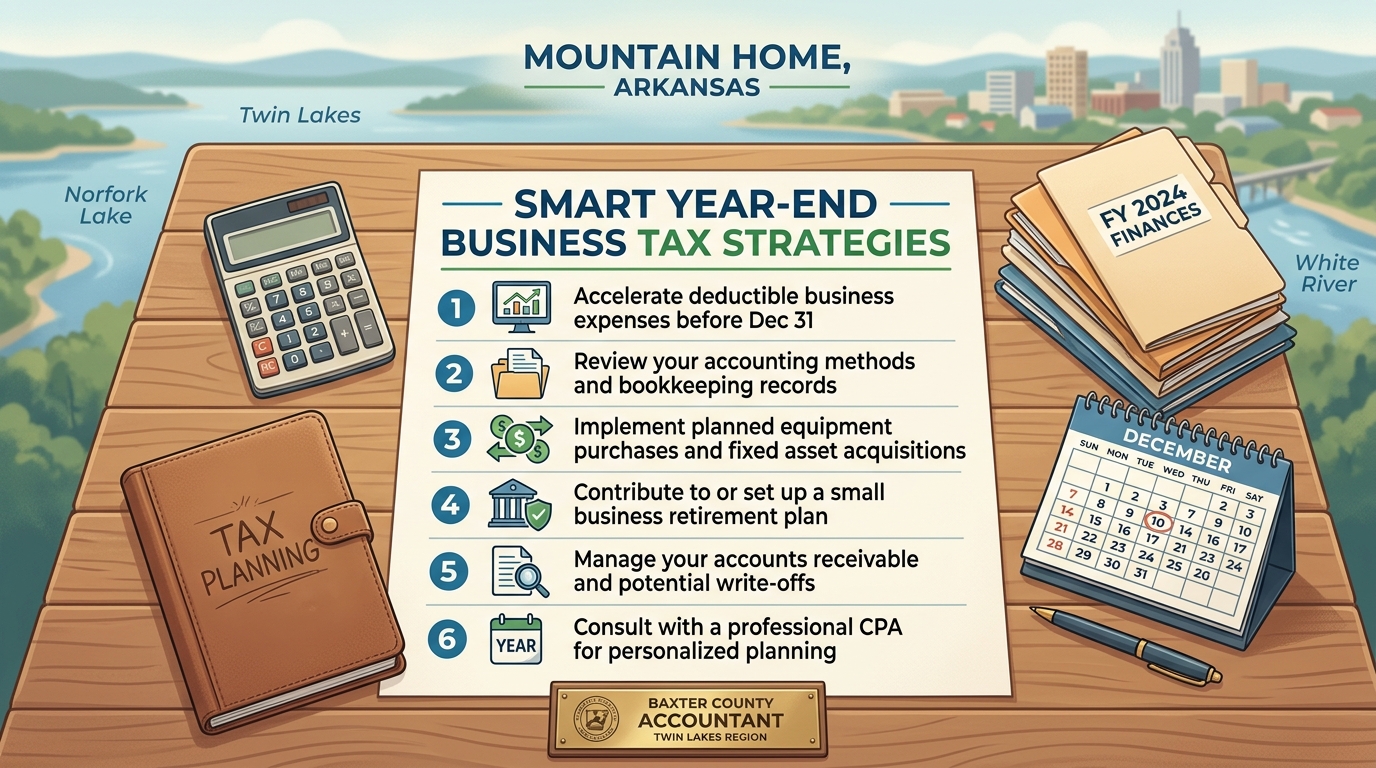
Here are six practical tax-planning steps to consider before the year closes.
1. Revisit Your Estimated Tax Payments
Business income does not always follow the same pattern from one quarter to the next. If revenue increased, decreased, or varied substantially during the year, the estimated tax payments you made earlier may not match your expected tax obligation.
Reviewing projected taxable income against the payments already submitted can help identify a shortfall before it becomes an underpayment issue. It can also prevent your business from sending more than necessary before the return is prepared.
As a Twin Lakes area CPA firm, The Callen Accounting Group can help translate your year-to-date numbers into a more accurate picture of your potential tax liability. This review is especially valuable for owners whose income has changed since their original estimates were calculated.
2. Complete Necessary Deductible Purchases
If your business already needs equipment, software, office supplies, or other ordinary operating items, buying them before year-end may allow the related deduction to be considered in the current tax year. The key is to focus on purchases that support real business needs.
Accelerating legitimate expenses may be useful when business income was stronger than expected. Reducing taxable income through appropriate purchases can improve your tax position while providing your team with resources it already needs to operate effectively.
However, tax savings alone should not drive a purchase decision. We encourage clients to consider cash flow, business priorities, and the lasting value of the item before moving forward.
3. Consider the Timing of Business Income
For a business that uses cash-basis accounting, when income is received can influence the year in which it is taxed. Depending on your circumstances and available cash flow, moving an invoice or payment collection into early January could defer that income to the following tax year.
This strategy may make sense if you expect to be in the same or a lower tax bracket next year. Still, decisions about invoice timing should never interfere with the operational needs of the business or create unnecessary strain on cash flow.
Reliable small-business bookkeeping and timely financial reporting make these conversations much easier. When your records are current, you can evaluate income timing with a better understanding of the full financial impact.
4. Review Retirement Plan Contributions
Year-end is an ideal time to assess retirement savings for both business owners and employees. Contributions to eligible plans, including SEP IRAs, SIMPLE IRAs, and 401(k) plans, may help lower taxable income while supporting long-term financial security.
Confirm whether you are on pace to meet your intended contribution goals, and make sure you understand the applicable limits and deadlines. Some retirement decisions must be addressed before year-end, while other plan contributions may have later deadlines.
A proactive conversation can connect retirement planning with the rest of your tax strategy rather than treating it as a separate task. The Callen Accounting Group can help you review how retirement contributions may fit into your broader year-end plan.
5. Evaluate Depreciation Opportunities
Businesses that acquired qualifying assets during the year should review whether Section 179 or bonus depreciation could apply. These provisions may allow a business to deduct a substantial portion of certain eligible asset costs sooner instead of spreading deductions over several years.
Accelerated depreciation may reduce current-year taxable income and improve available cash flow. For many owners, this makes it important to review equipment and other asset purchases before finalizing the year’s tax strategy.
Timing matters. In general, qualifying property needs to be placed in service before the end of the tax year for the business to claim the available deduction for that year. Accurate business accounting services and financial statements preparation can help ensure those purchases are properly tracked.
6. Plan for Employee Bonuses and Charitable Gifts
The final part of the year is also a good time to evaluate employee bonuses and charitable giving. A properly structured year-end bonus can recognize the contributions of your team while potentially creating a deductible business expense.
Charitable contributions to qualified organizations may also offer tax advantages while allowing your business to support causes that are meaningful to your company and community. Documentation and timing are important for both bonuses and donations.
Businesses using payroll services in Mountain Home should make sure planned bonuses are processed appropriately. Likewise, charitable gifts should be completed and documented before the tax year ends to support any potential deduction.
Do Not Put Tax Planning Off Until Filing Time
Waiting until tax preparation season to examine your business finances can limit the choices available to you. Many useful planning opportunities, including income timing, deductible purchases, retirement contributions, depreciation decisions, bonuses, and charitable gifts, depend on action taken before December 31.
Year-end planning is not simply about minimizing a tax bill. It is an opportunity to review your records, assess cash flow, prepare for the months ahead, and enter the new year with greater confidence in your financial direction.
The Callen Accounting Group provides tax preparation in the Twin Lakes area, along with bookkeeping, payroll, QuickBooks setup, financial statement preparation, and year-round accounting support for small businesses. Whether you operate in Mountain Home, elsewhere in Baxter County, or across South Central Missouri, our team can help you review your year-end tax strategy and identify practical next steps before the calendar changes.