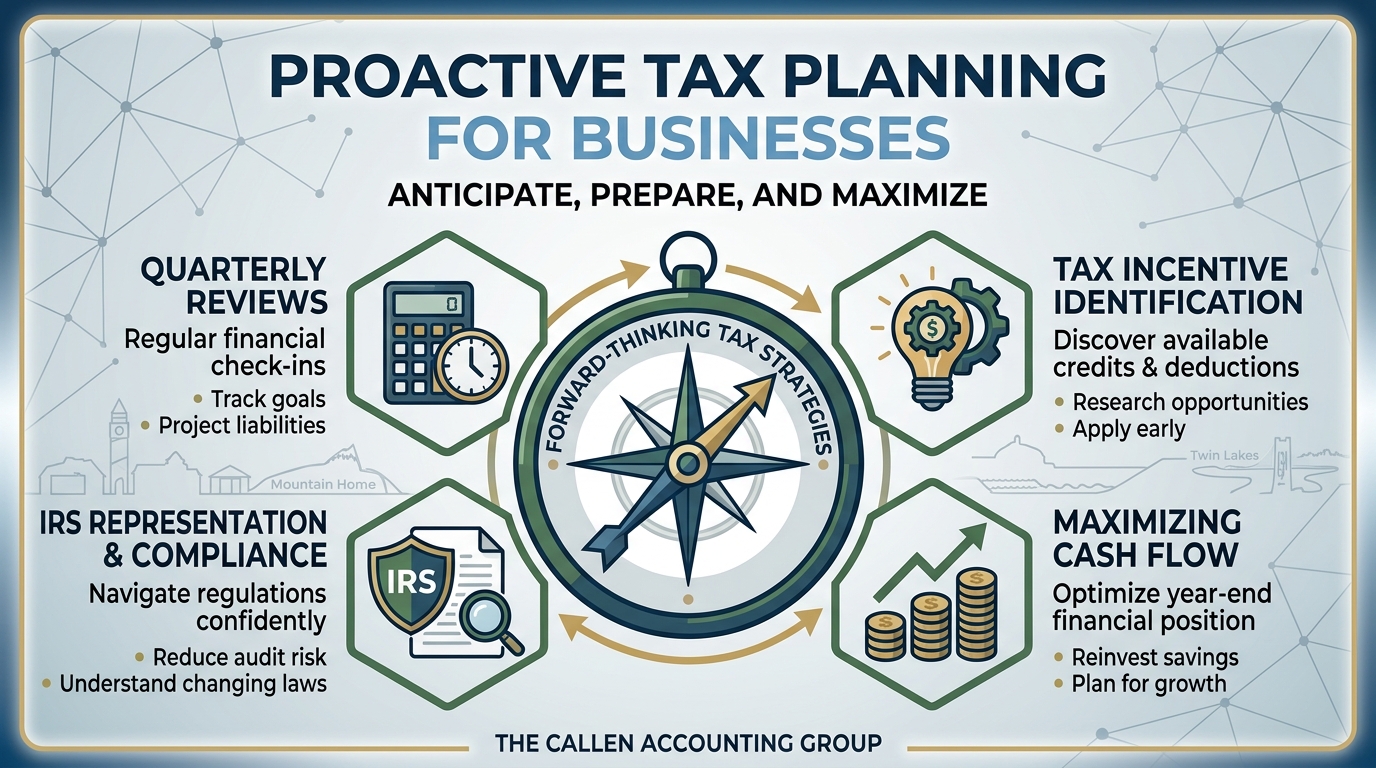
Proactive Tax Strategies - Business
Year-end business tax planning can help you make informed financial decisions before December 31, rather than waiting until filing season to discover missed opportunities. By reviewing deductions, planned investments, income timing, and estimated payments now, business owners can better manage tax exposure and protect cash flow. The Callen Accounting Group helps small businesses throughout the Twin Lakes area and South Central Missouri evaluate practical strategies that fit their individual goals.
Every business has a different mix of income, expenses, operations, and long-term priorities. A thoughtful review before the calendar year closes can reveal items that need attention while there is still time to act. For businesses in Mountain Home, Baxter County, and the surrounding region, proactive planning can make tax preparation more efficient and support a stronger financial position for the year ahead.
Review Deductible Business Expenses
A close review of deductible expenses is a useful starting point for year-end planning. Legitimate business costs can be missed when receipts are not retained, transactions are assigned to the wrong category, or bookkeeping is allowed to fall behind during a busy year.
Depending on the nature of your business, ordinary and necessary expenses may include office supplies, software subscriptions, professional fees, insurance, advertising, repairs, business travel, equipment maintenance, and continuing education. Reviewing these transactions helps ensure expenses already incurred are accurately reflected in your records.
Consistent small business bookkeeping also makes the tax preparation process less stressful. When records are current and organized, it is easier to identify available deductions and make well-supported decisions before year-end.
Revisit Equipment and Asset Purchases
If you have been considering a business purchase, year-end may be an appropriate time to review whether it makes operational and financial sense. Computers, furniture, vehicles, machinery, and other qualifying assets may offer tax advantages when placed in service before December 31, depending on your circumstances.
Available provisions may include the Section 179 deduction, bonus depreciation, or other tax benefits. The right approach depends on factors such as the type of asset, your business income, and your broader tax strategy.
It is important not to make a purchase solely for a deduction. The Callen Accounting Group encourages businesses to consider whether an investment genuinely supports operations, productivity, and long-term goals in addition to any potential tax savings.
Consider When Income and Expenses Are Recognized
The timing of business income and deductible expenses can affect your tax picture. Based on your accounting method and financial circumstances, it may be beneficial to accelerate certain expenses into the current year or defer some income until the next year.
For example, a business may decide to purchase supplies already included in its plans, complete needed repairs before year-end, or carefully consider the timing of customer invoices. These choices should be evaluated as part of a complete strategy, not as isolated transactions.
Once the year ends, many of these planning options are no longer available. Reviewing timing decisions before December 31 gives your business more flexibility to act deliberately rather than react after the fact.
Review the Qualified Business Income Deduction
The Qualified Business Income, or QBI, deduction remains an important consideration for many pass-through businesses. The One Big Beautiful Bill Act made the Section 199A QBI deduction permanent and introduced additional changes beginning in 2026.
Before the end of the year, it may be helpful to compare projected taxable income, qualified business income, and W-2 wages. In some cases, adjustments made before December 31 can influence the amount of the deduction and your overall tax liability.
Because QBI calculations can vary significantly from one owner to another, personalized planning matters. A Twin Lakes area CPA can help you review how this deduction may apply to your specific business and financial circumstances.
Confirm Estimated Tax Payments
Businesses and owners who make estimated tax payments should review their current projections before year-end. If income changed substantially during the year, prior estimates may no longer reflect what you will owe.
Updating estimated payments when appropriate may help reduce the risk of underpayment penalties and improve cash-flow planning. It can also provide a clearer picture of what to expect when your return is prepared.
Looking ahead is equally valuable. Marking upcoming estimated payment due dates and maintaining current financial information can help your business avoid missed deadlines and unnecessary surprises.
Protect Cash Flow While Seeking Tax Savings
Reducing taxes is an important goal, but a deduction should not undermine your business’s financial stability. Before accelerating expenses or making a large purchase, consider how the decision will affect working capital, payroll obligations, and your ability to respond to future needs.
In some situations, maintaining cash reserves and operational flexibility may be more valuable than creating an additional deduction. Effective tax planning balances current savings with the resources your business needs to remain healthy and prepared.
The Callen Accounting Group works with clients to connect tax decisions with the bigger financial picture. That includes considering bookkeeping records, payroll needs, financial statements, and other business accounting services that inform sound decisions.
Check Your Business Structure and Financial Records
Year-end is also a good time to consider whether your current business structure still fits your needs. Growth, ownership changes, expanded operations, and shifts in profitability can affect whether the entity structure that worked in the past remains the best option going forward.
Your financial records deserve attention as well. Reviewing fixed asset schedules, reconciling accounts, and confirming that bookkeeping records are current can make tax preparation smoother and provide more dependable information for future planning.
For businesses using accounting software, a QuickBooks setup review or cleanup may help ensure reports are accurate and useful. Reliable financial statements preparation supports better decisions throughout the coming year, not only at tax time.
FAQ
When should a business begin year-end tax planning?
It is best to begin reviewing your tax position well before December 31. Starting early gives you time to gather records, evaluate planned purchases, review income and expenses, and consider options that may no longer be available after the year ends.
Can I buy equipment just to reduce my business taxes?
Equipment purchases may provide tax benefits, but they should also serve a legitimate business need. Before making a purchase, consider its cost, usefulness, effect on cash flow, and how it fits into your long-term operational plans.
Why are current bookkeeping records important before year-end?
Accurate books help identify deductible expenses, confirm income, support estimated tax calculations, and simplify tax preparation. Current records also provide a more reliable basis for decisions involving expenses, payroll, and business investments.
What should I review if my business income changed during the year?
Review projected taxable income, estimated tax payments, deductible expenses, and cash flow. A change in income may affect whether your payments remain sufficient and whether certain year-end planning opportunities should be considered.
Can The Callen Accounting Group help with more than tax preparation?
Yes. The Callen Accounting Group provides full-service tax preparation and planning along with bookkeeping, payroll services in Mountain Home, financial statements preparation, QuickBooks assistance, IRS representation in Arkansas, and estate and trust tax planning. Our family-owned firm serves individuals and small businesses across the Twin Lakes region and South Central Missouri.
No two businesses share the same tax circumstances. Reviewing deductions, planned purchases, income timing, estimated payments, financial records, and cash-flow needs before December 31 can help uncover opportunities that align with both your tax position and your business goals.
If you would like guidance with year-end planning, The Callen Accounting Group is here to help. Contact our Mountain Home team at (870) 425-6066 to discuss business tax planning strategies tailored to your situation.